Over a decade of organic growing
Welcome to Barnhill Farm
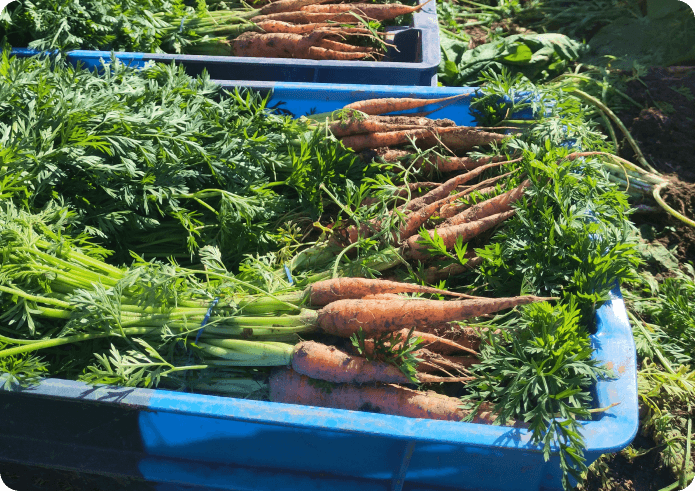
After spending more than 10 years growing organic vegetables on a number of small sites in and around Glasgow, we were pleased to move to Barnhill Farm near Inchinnan at the start of 2025, where we now have 21 acres of good land and a well kitted-out shed for packing our veg boxes.
Nurturing the soil
From grazing fields to thriving organic farm
The land had previously been used for grazing, with no artificial chemical inputs for decades, and is now in organic conversions while we continue to grow to organic standards.
In our first year growing here we are busy converting the field into a productive organic vegetable farm and we are already growing a wide range of organic produce.
Two acres of opportunity
Our thriving market garden
Around 2 acres of the site is being developed as a market garden, using many of the hand scale techniques and principles we have learned over the last decade at our smaller sites. This includes creating plots of semi-permanent vegetable beds and setting up areas of perennial herbs and vegetables which will grow back year after year.
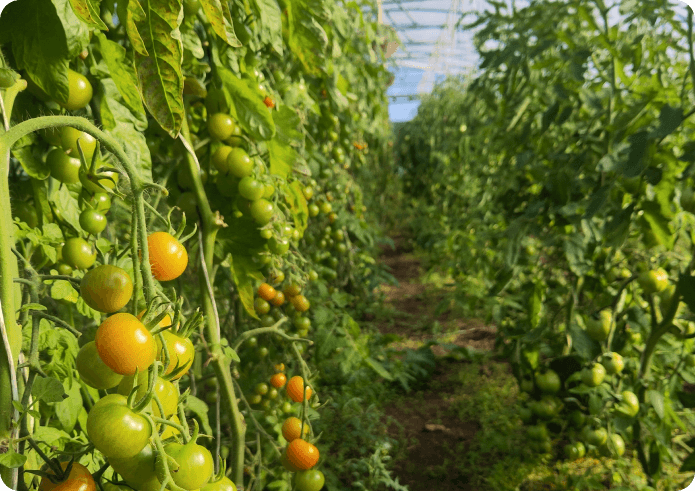
We’re also in the process of building more polytunnels in the market garden and by spring 2026 we should have around a third of an acre of growing space undercover.
Polytunnels allow us to grow a wider range of produce right through the year so we aim to continue expanding this.
Expanding our reach
Fields for sustainable abundance
Outside of the market garden we are managing most of the rest of the farm using tractors and machinery, something which is quite new to us. After a decade of pushing the limits of what can be done with hand scale horticulture we took the plunge in 2025 and invested in an eclectic assortment of machinery to allow us to mange more land more easily so that we can produce more sustainable local food than ever before.
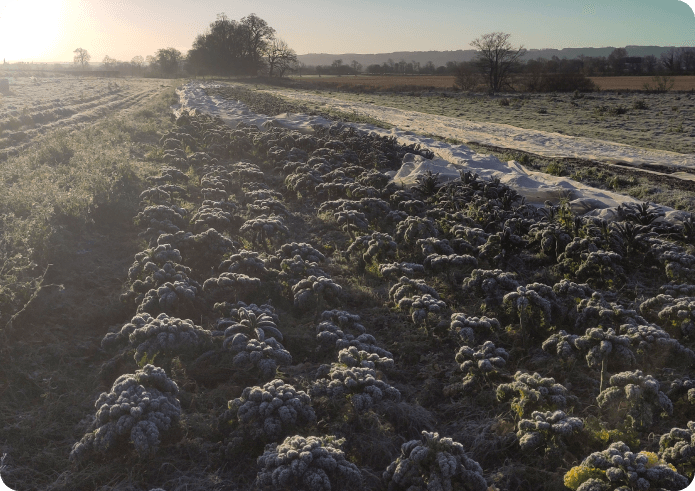
Our field plots are about an acre each, and made up of thirteen beds which are around 150m long and 1.3m wide. The plots are dedicated to different plant families so that we can rotate crops for soil health, and to prevent pest and plant disease without the use of artificial chemicals.
Our first season saw us grow more than ever before and we learned lots to do even better in 2026.
Growing more than ever
Our field plan for 2026
Nurturing the Land
Crop rotation and fertility building
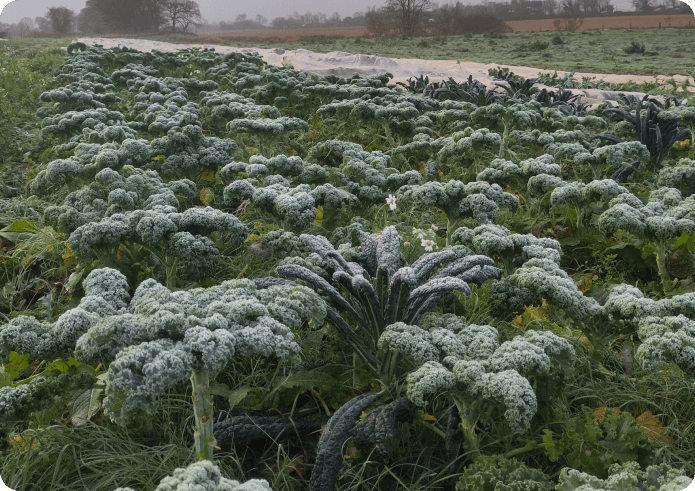
As well as growing the crops above for our shop and veg box customers to eat we grow plants especially to improve the health of the soil and our farm’s biodiversity. We do this by growing fertility building crops which build soil carbon by putting the plants and their nutrients back into the soil. Nature is clever and gives us the solutions to sustainable food growing.
We’ll rotate where we grow crops and give areas of a land breaks to grow these green manures as well as fitting in quick cover crops after our vegetables have been harvested.
Looking ahead
Plans to grow food, nature, and community
We’ve got lots of ideas to grow more and more food on our farm in the coming years so that we can keep improving the local food offer which is available in our shops and through our veg boxes. We also want to make the site more valuable to biodiversity and as a place to visit, learn and enjoy.
In early 2026 we're planting the first of our agroforestry strips which will provide useful and productive areas of trees between our field crops. This will include planting around 80 apple trees, hundreds of blackcurrant bushes and around 500 native trees.
© 2026 - Locavore
Powered by
